
Zofia Stryjeńska - Hutsul Woman from Vorokhta



 Description
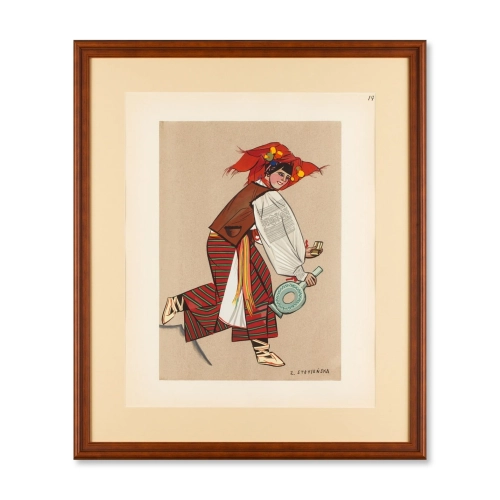
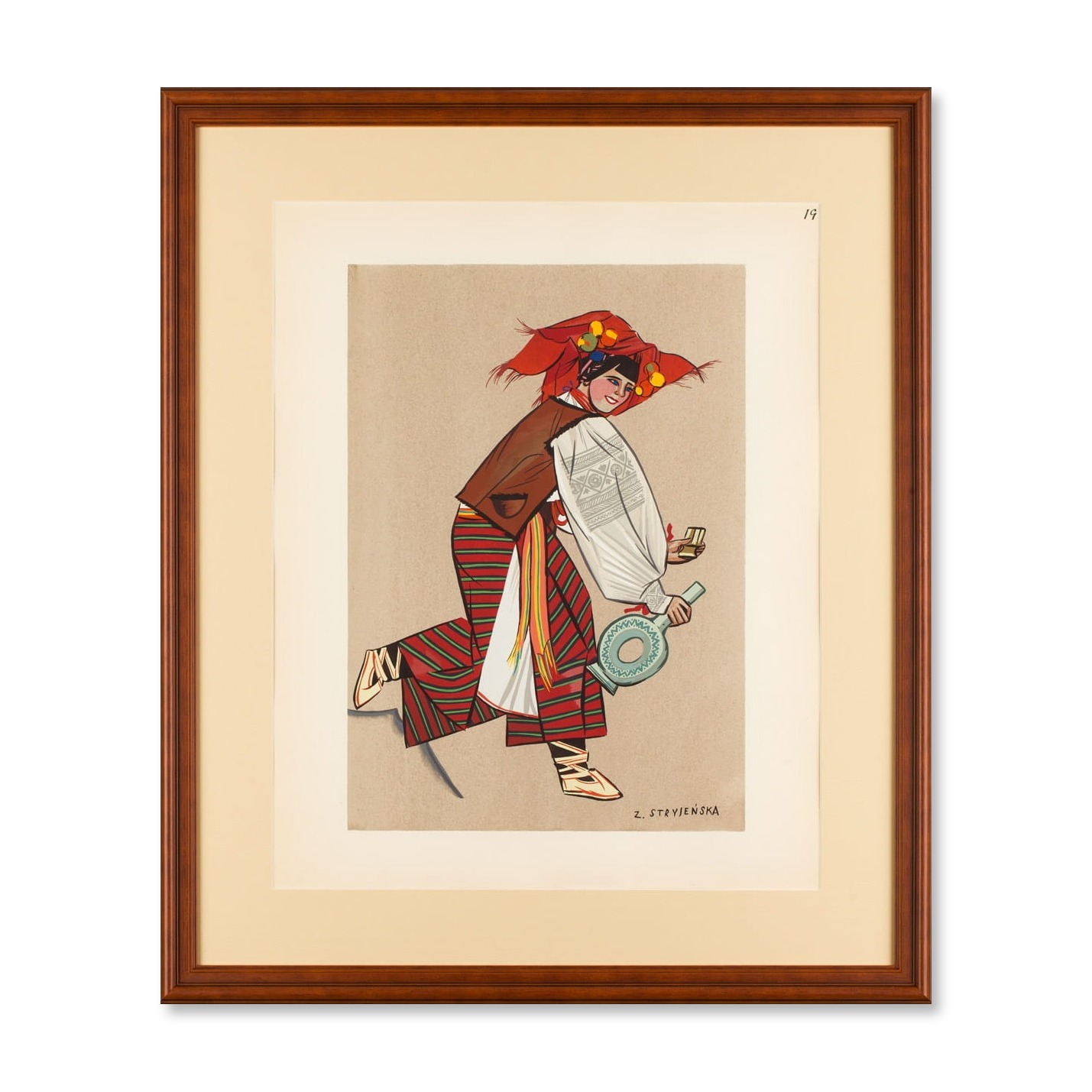
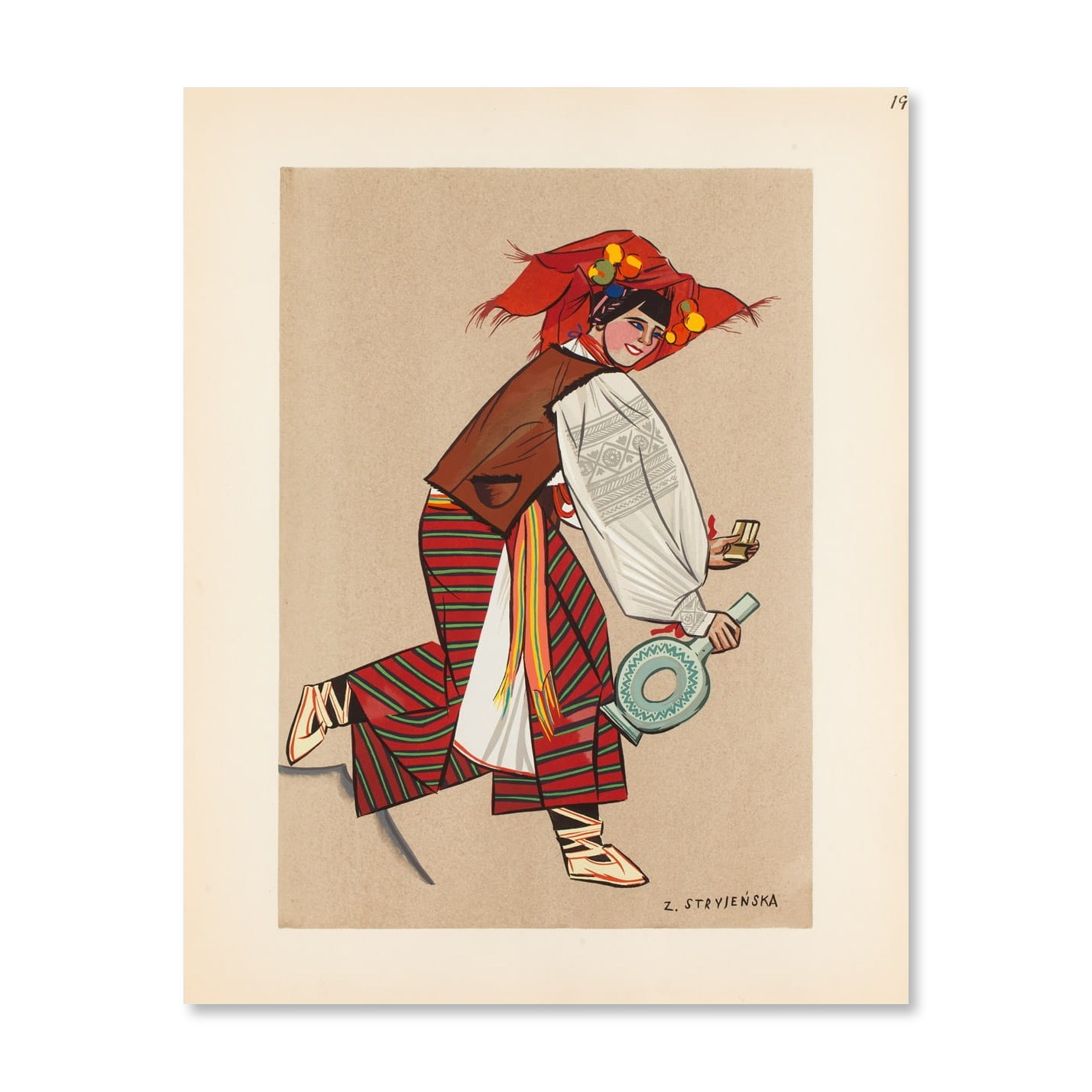
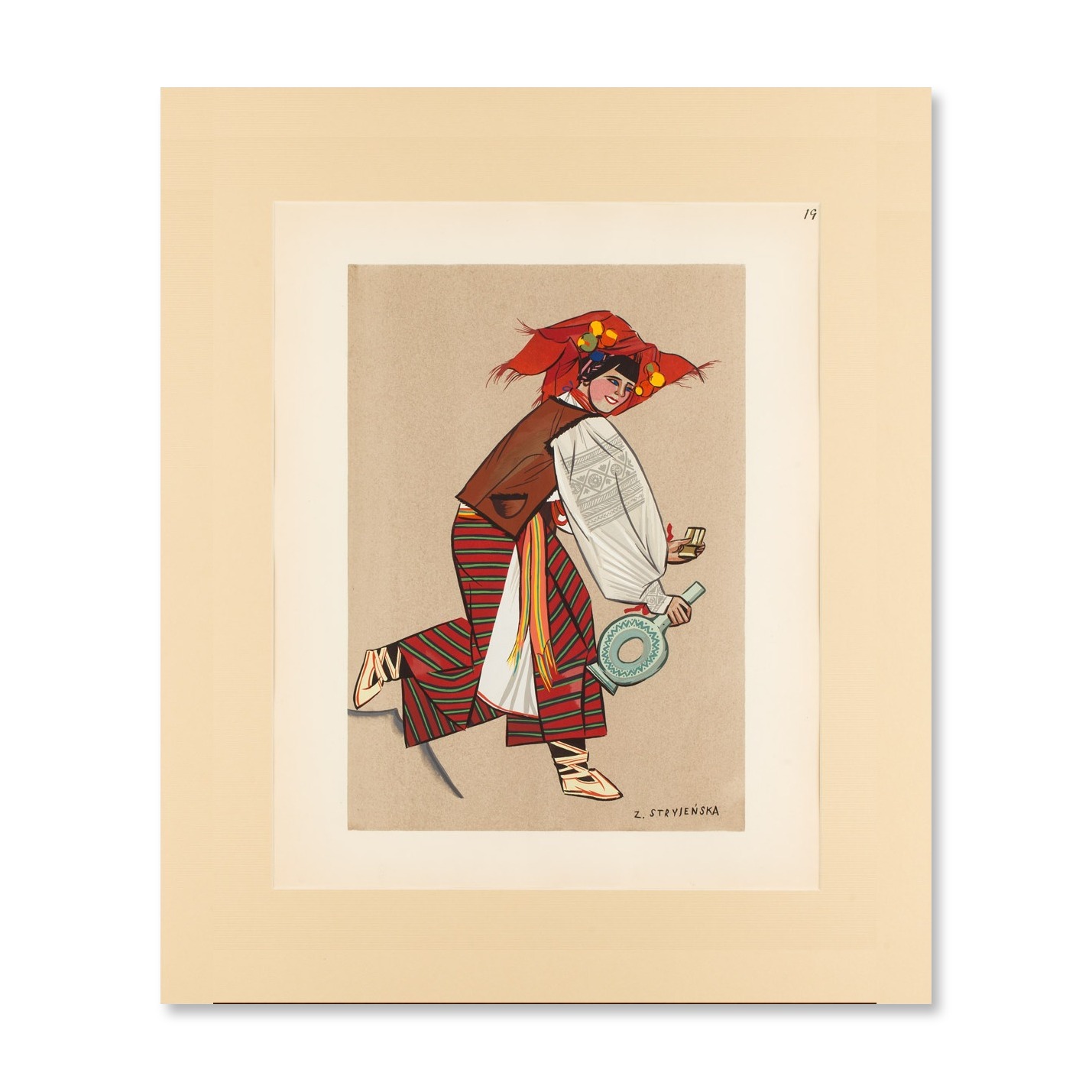
Zofia Stryjeńska – "Hutsul Woman from Vorokhta"
Plates by Zofia Stryjeńska – available exclusively online.
We encourage you to schedule a private viewing of the works at our gallery on Plac Konstytucji.
Contact: online@desamodern.pl | +48 538 890 457
Zofia Stryjeńska preserved the vibrant ethnic landscape of the Second Polish Republic from being forgotten. The region of the Eastern Carpathians, today located in Ukraine, was inhabited from the 14th century until World War II by the Hutsuls — settlers of Ruthenian and Vlach origin. They spoke a completely mosaic language, blending Polish, Hungarian, and Russian words with Romani and Armenian. Hutsul customs fascinated many artists of the interwar period — including Teodor Axentowicz and Jarosław Iwaszkiewicz. Stryjeńska immortalized the traditional Hutsul female attire, composed of a front and back apron and a sheepskin coat. On the sleeve of the linen blouse, we see a fragment of characteristic ornamental embroidery, still preserved today in some Hutsul wooden churches.
Plate 16, 1939
Color lithograph / cardboard
Signed lower right: ‘Z. Stryjeńska’
Framed dimensions: 64 × 54 cm
The original lithograph by Zofia Stryjeńska was created using a flat printing technique with a stone matrix. The work is framed in a cream passe-partout and a classic frame made of natural wood in an aged brown color.
Zofia Stryjeńska (1891–1976) — an outstanding Polish painter, illustrator, and scenographer. In 1925, during the International Exhibition of Decorative Arts in Paris, she presented a series of panels titled The Ritual Year in Poland at J. Czajkowski’s pavilion. In 1932, she was awarded a gold medal at the 18th Venice Biennale. She was also honored with the Knight’s Cross of the Legion of Honour. Stryjeńska reinterpreted folklore in Polish art. The central motif of her work was celebration — the topos of the immortal folk carnival. Using rustic ornamentation, she boldly ushered in a new era of decorative painting, both formally and narratively.


