
Zofia Stryjeńska – Shepherd from the Tatra Mountains


 Description
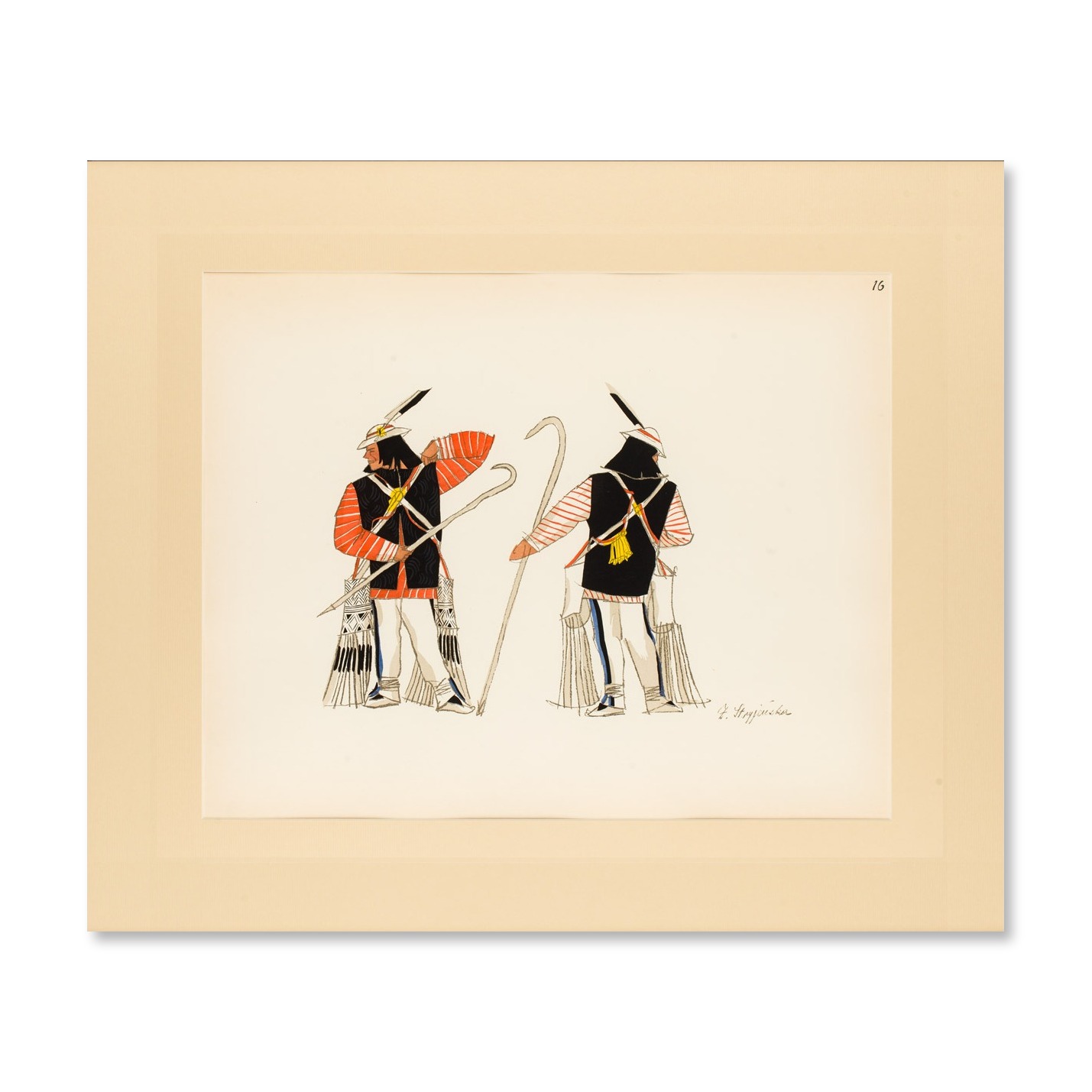
Zofia Stryjeńska – "Shepherd from the Tatra Mountains"
Plates by Zofia Stryjeńska – available exclusively online.
We encourage you to schedule a private viewing of the works at our gallery on Plac Konstytucji.
Contact: online@desamodern.pl | +48 538 890 457
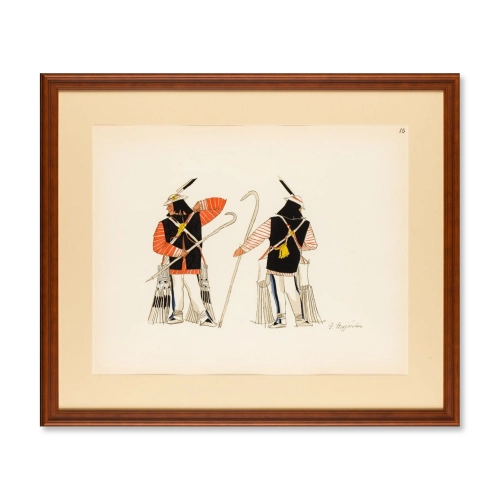
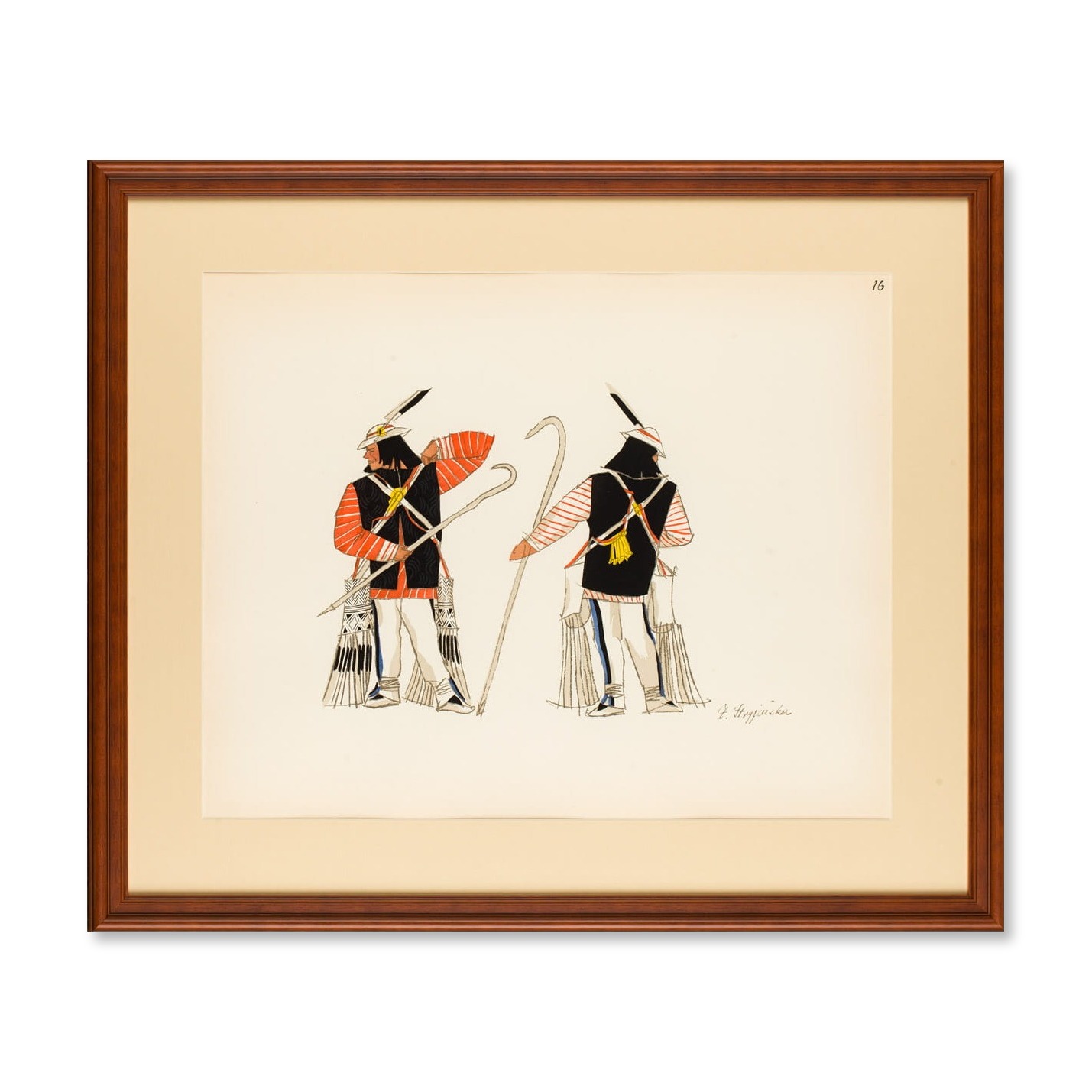
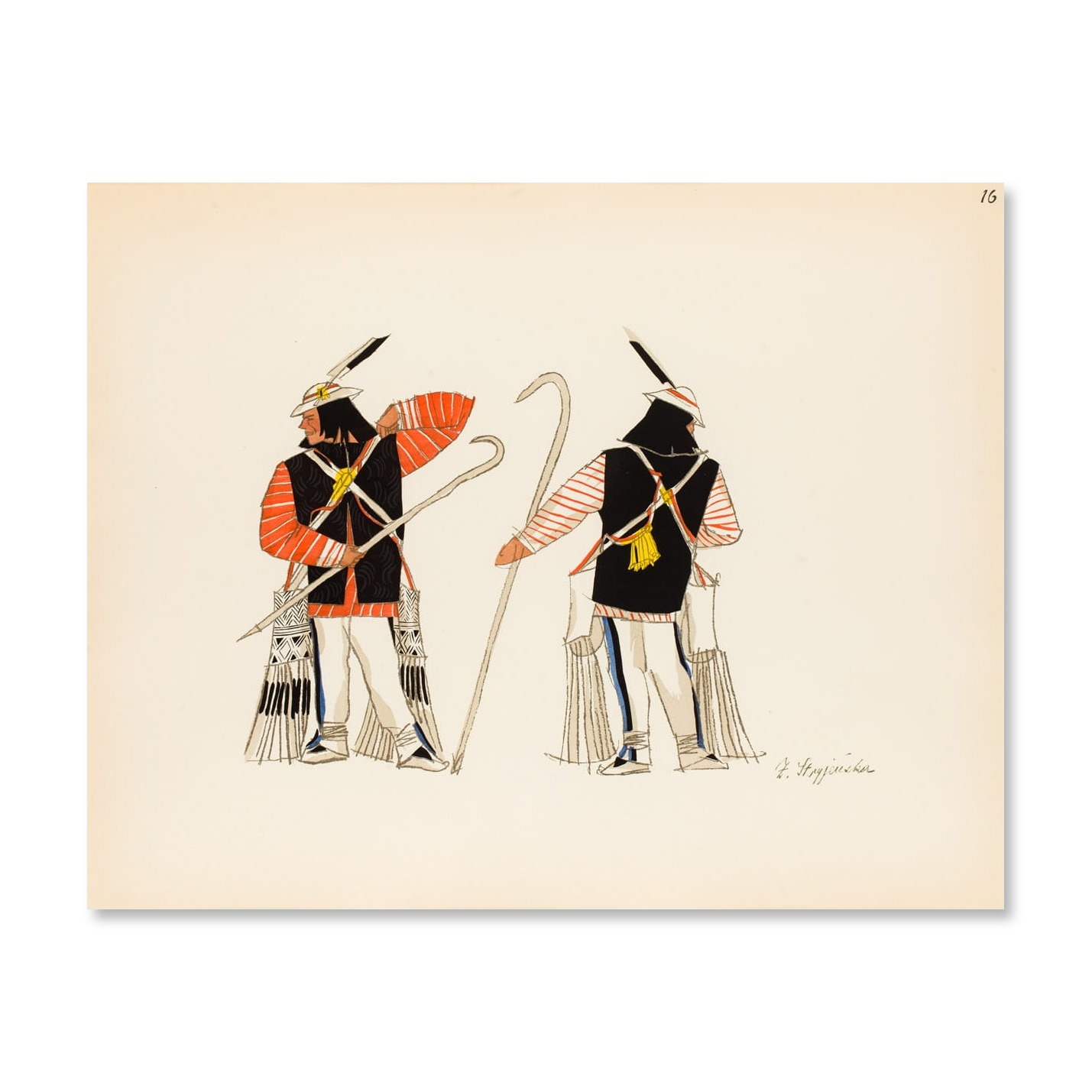
Stanisław Witkiewicz, in the early 20th century, searching for traces of a "national style," fell in love with the Podhale region. No wonder — even today, the highlander folklore from the Tatra area is considered the essence of Polish folk tradition. In Zofia Stryjeńska’s lithograph, we see a full male ensemble depicted from head to toe. Traditional shoes, called kierpce, were hand-stitched from a single piece of leather. Then came the nawołki — thin leather straps used to tie the trousers just above the ankles. The trousers themselves, called portki, had a tapered cut with a distinctive slit in the leg and were sewn from woolen cloth. Draped over the shepherd’s shoulders is a serdak, a vest made of sheep’s wool. Finally, a felt hat known as a kłobuk, adorned with shells around the brim — a reminder of the days when this exotic good for the mountainous region was used as currency.
Plate 19, 1939
Full title of the folio: "Z. Stryjeńska, Polish Peasants' Costumes"
Color lithograph / cardboard
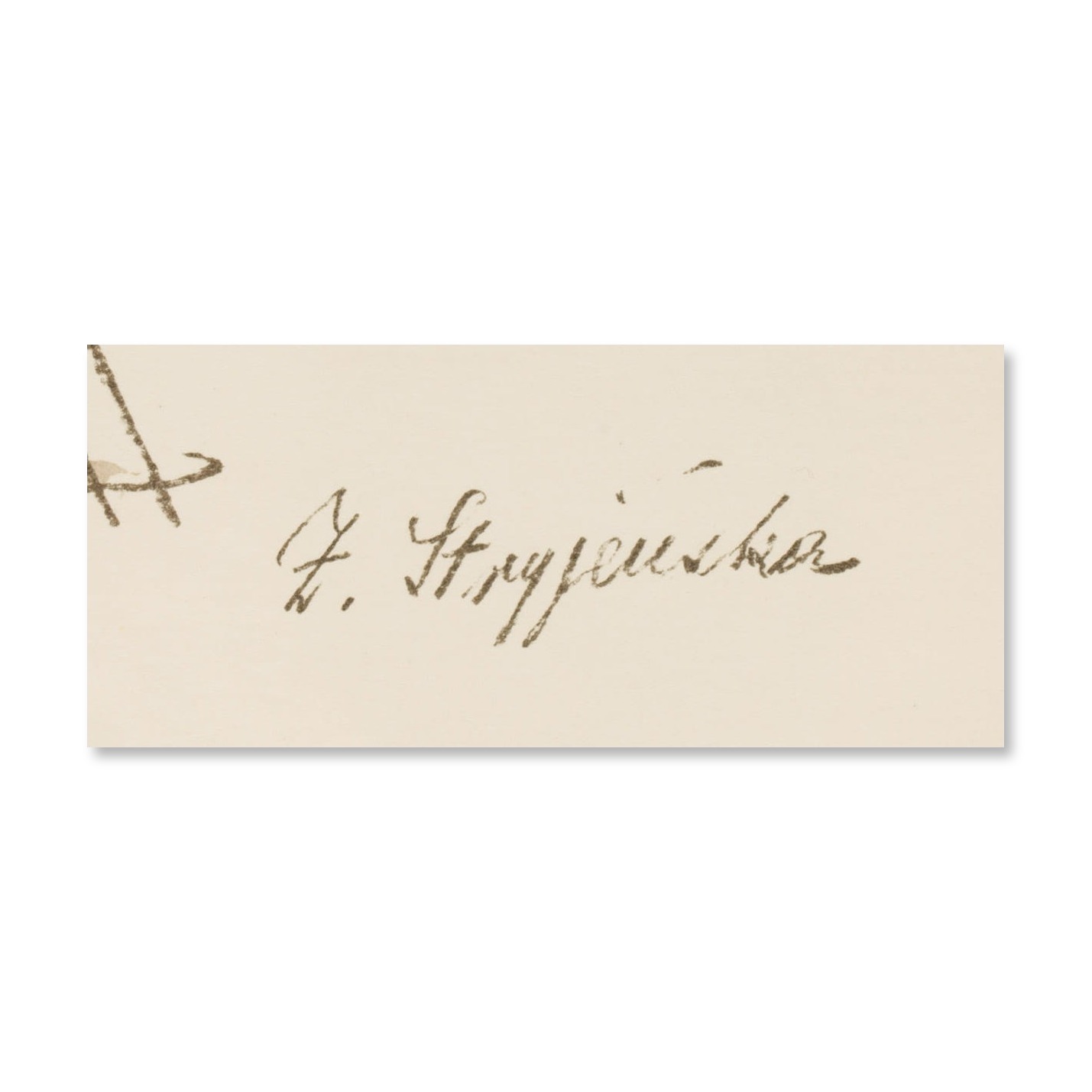
Signed lower right: ‘Z. Stryjeńska’
Framed dimensions: 64 × 54 cm
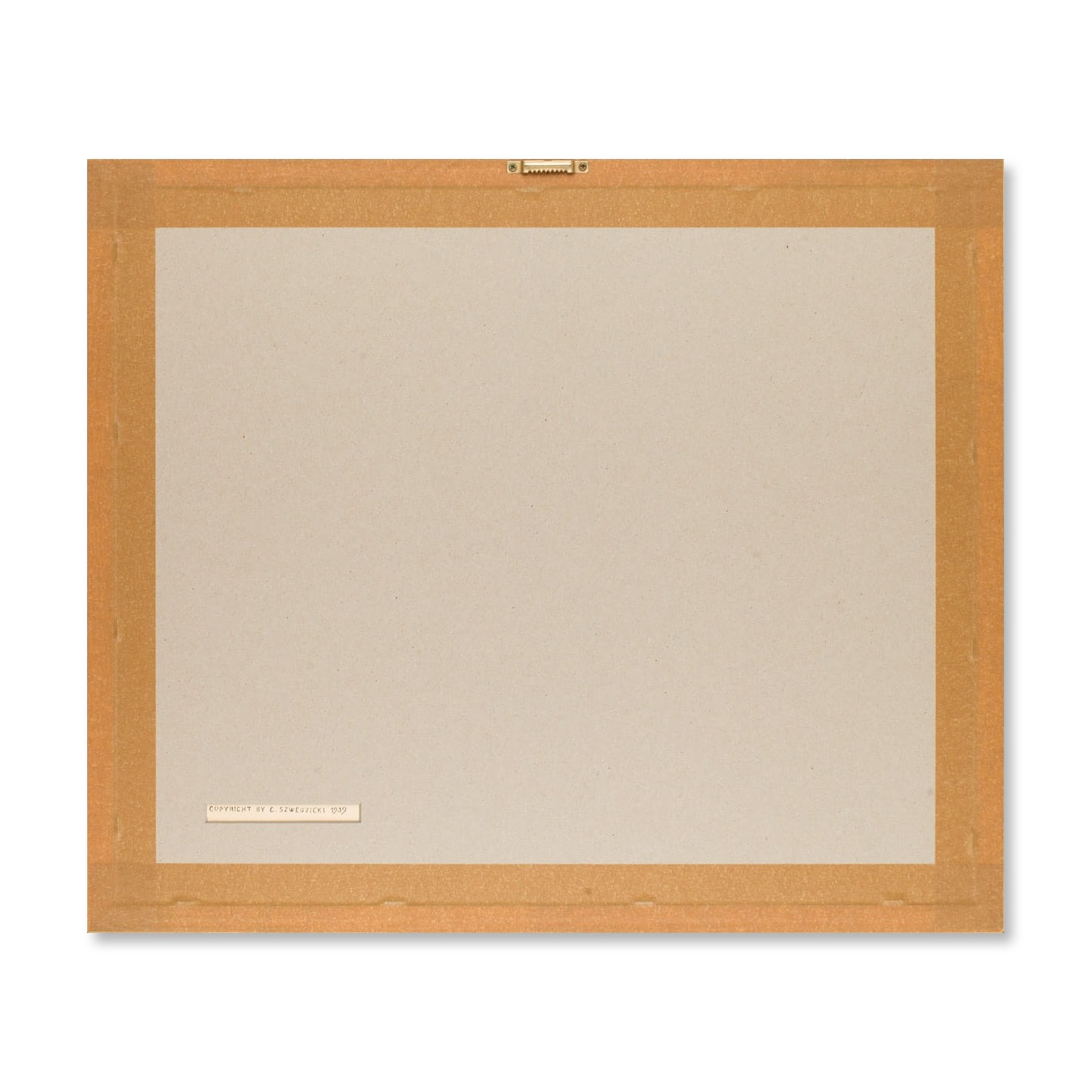
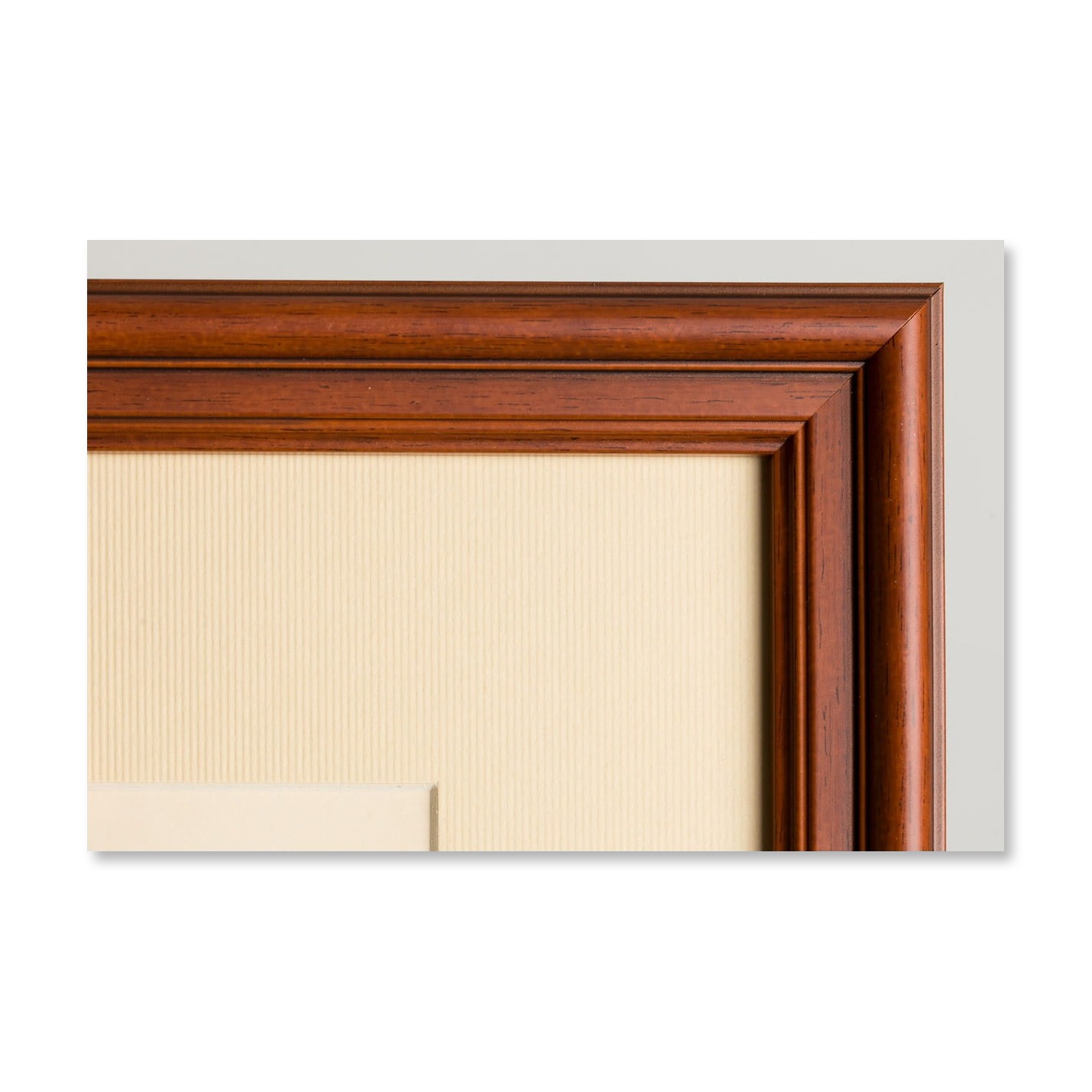
The original lithograph by Zofia Stryjeńska was created using a flat printing technique with a stone matrix. The work is framed in a cream passe-partout and a classic frame made of natural wood in an aged brown color.
Zofia Stryjeńska (1891–1976) — an outstanding Polish painter, illustrator, and scenographer. In 1925, during the International Exhibition of Decorative Arts in Paris, she presented a series of panels titled The Ritual Year in Poland at J. Czajkowski’s pavilion. In 1932, she was awarded a gold medal at the 18th Venice Biennale. She was also honored with the Knight’s Cross of the Legion of Honour. Stryjeńska reinterpreted folklore in Polish art. The central motif of her work was celebration — the topos of the immortal folk carnival. Using rustic ornamentation, she boldly ushered in a new era of decorative painting, both formally and narratively.


